know Medog
IT’S TIME TO
The Hidden Lotus
The word "Medog" derives from the Tibetan "མེ་ཏོག," meaning "flower." Historically, this land was known as "Pemakö", Tibetan for "the hidden lotus." Legend has it that when Guru Rinpoche, the great master of Tantric Buddhism, journeyed across the sacred lands of the Himalayas and arrived here, he saw the encircling mountains unfold like the petals of a lotus in bloom. He praised this place as "the purest of Buddha's pure lands, the most sacred among the sacred," and stayed to practice and spread the dharma — imbuing Medog with a spiritual identity that endures to this day.
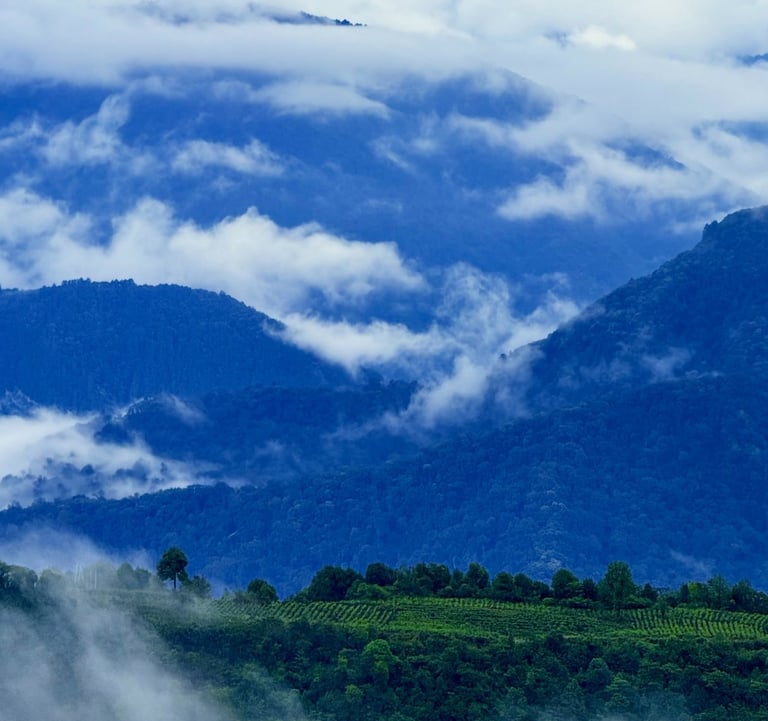
Medog lies in southeastern Tibet, on the southern slopes of the Himalayas, where the Yarlung Tsangpo River surges through the deepest canyon on Earth. Warm, moisture-laden currents from the Indian Ocean travel up the gorge, giving Medog a character strikingly different from the rest of the Tibetan Plateau. With a forest coverage rate of 78%, the region compresses an almost complete ecological spectrum within its dramatic vertical drop — from glacial peaks to subtropical rainforest.
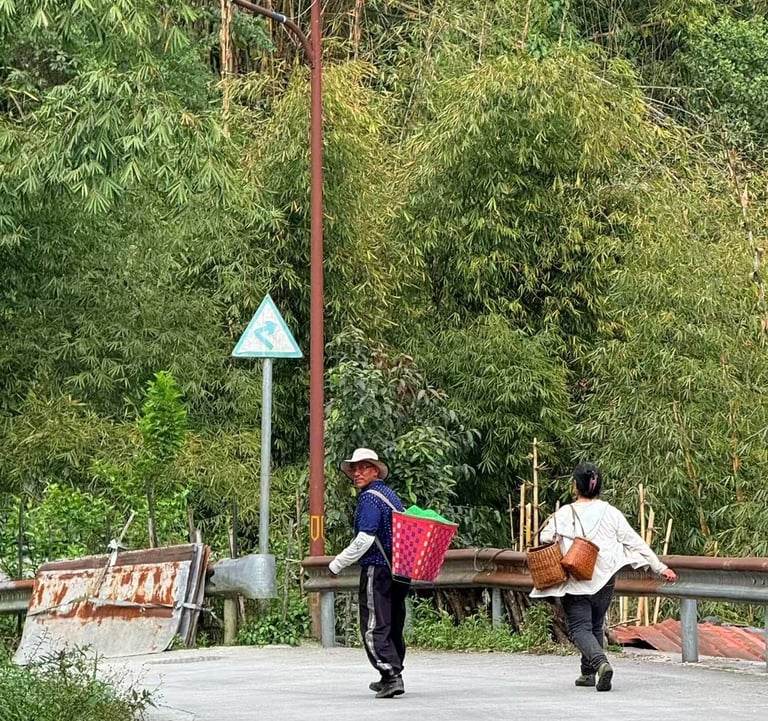
For centuries, the Monpa and Lhoba peoples have called this land home. The Monpa are renowned for their exquisite bamboo weaving and carved wooden bowls, while the Lhoba have preserved ancient oral epics and hunting traditions. Together, the two ethnic groups have developed distinctive architecture, textiles, music, dance, and belief systems in these deep valleys and dense forests, making Medog a living treasury of cultural heritage in southeastern Tibet.
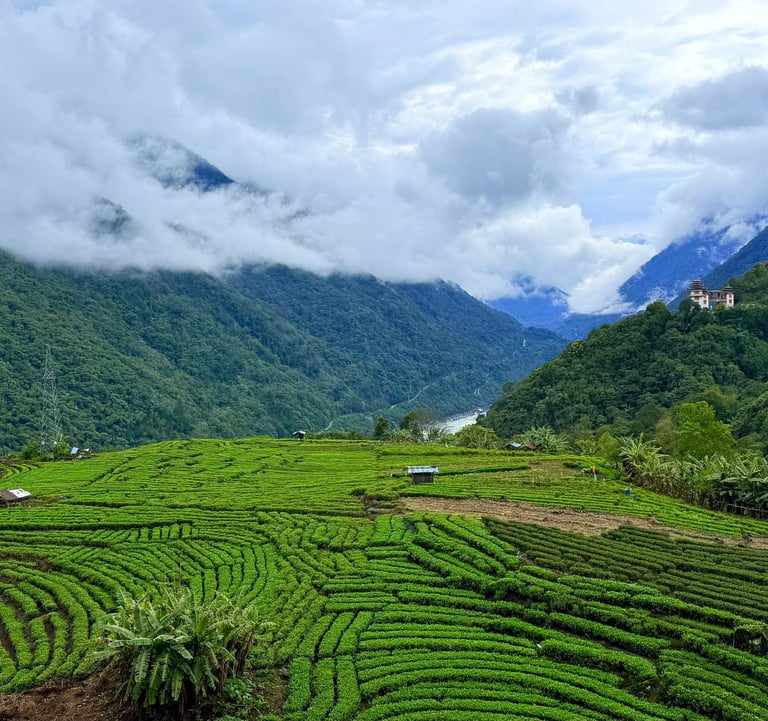
Cut off by towering mountains, Medog was long known as the "isolated island of the plateau" — the last county in China to be connected by road. In 2013, the Zhamog Highway officially opened, ending millennia of isolation. Around that same period, aid teams from traditional tea-producing regions such as Guangdong, Fujian, and Sichuan discovered that Medog's moderate altitude, abundant cloud cover, organic-rich soil, and significant day-to-night temperature variations provided ideal conditions for cultivating premium tea. In 2011, the first experimental tea field took root here. Since then, tea gardens have spread across the mountainsides — from Beibeng to Gelin, from Damu to Gandeng — with terraced rows of tea bushes becoming a defining new feature of the Medog landscape.
There is a well-known Tibetan proverb: "One can go three days without food, but not a single day without tea." Historically, the tea consumed on the plateau had to travel thousands of miles along the ancient Tea Horse Road. Today, the people of Medog grow their own tea on their own land. Nourished by glacial meltwater, cradled in mist, and surrounded by primeval forest, every leaf of Medog tea carries the purity and clarity bestowed by this hidden land.
Exceptional terroir gives Medog tea its remarkable quality. Most tea gardens are situated on mountain slopes between 800 and 1,600 meters above sea level, perpetually bathed in clouds rising from the Yarlung Tsangpo gorge. Gentle sunlight, rich in diffused rays, slows the growth of the tea plants, allowing amino acids, polyphenols, and other beneficial compounds to accumulate fully in each leaf. Far removed from industrial pollution, with soil untouched by chemical pesticides and irrigated by snowmelt filtering down from the heights, Medog is a naturally organic growing environment. When brewed, Medog tea yields a clear, luminous liquor with a fresh, sweet aftertaste and the delicate floral aroma and lingering finish characteristic of high-mountain cloud teas. Whether it is the vibrant freshness of its green teas or the mellow sweetness of its black teas, Medog tea stands apart on China's tea map with its defining advantages: high altitude, zero pollution, and slow growth.
Photo Gallary